What Is GEO? Complete Guide to AI Search Optimization
What Is Generative Engine Optimization (GEO)?
In the rapidly evolving digital landscape, traditional SEO is no longer enough to stay competitive. With the rise of AI-powered search engines like ChatGPT, Google’s AI Overviews, and other generative platforms, a new concept has emerged—Generative Engine Optimization (GEO).
If you want your brand to stay visible in the future of search, understanding and implementing generative engine optimization GEO is essential. This guide will help you understand what GEO is, how it differs from SEO, and how to optimize your content for AI-driven search engines.
Understanding Generative Engine Optimization (GEO)
Generative Engine Optimization (GEO) is the process of optimizing your content so that it is easily discovered, interpreted, and featured by AI-powered search engines and generative tools.
Unlike traditional search engines that display a list of links, generative engines provide direct answers, summaries, and conversational responses. These responses are created using AI models that analyze multiple sources of information.
Key Characteristics of GEO:
- Focuses on AI-generated responses
- Prioritizes context, clarity, and authority
- Rewards high-quality, structured content
- Targets conversational and intent-based queries
In simple terms, GEO ensures that your content becomes part of the answers, not just the search results. social
Why GEO Matters in 2026 and Beyond
Search behavior is changing rapidly. Users are no longer just typing keywords—they are asking questions, expecting precise answers, and interacting with AI Seo.
Here’s why generative engine optimization GEO is crucial:
- Rise of AI Search Engines
AI tools like ChatGPT and Google AI are transforming how users find information.
- Zero-Click Searches
Users now get instant answers without clicking multiple links.
- Increased Competition
Early adopters of GEO gain a strong competitive edge.
- Better User Experience
AI rewards content that is helpful, structured, and easy to understand.
GEO vs SEO Difference
Understanding the GEO vs SEO difference is key to adapting your strategy effectively.
Factor | SEO (Search Engine Optimization) | GEO (Generative Engine Optimization) |
Focus | Ranking on SERPs | Appearing in AI-generated answers |
Content Style | Keyword-focused | Intent and context-focused |
Output | List of links | Direct answers |
Strategy | Keywords, backlinks | Structure, clarity, authority |
Key Takeaway:
SEO helps you rank, but GEO helps you own the answer space.
How Generative AI Search Works
To optimize properly, you need to understand how AI search engines work:
- User Query Understanding
- Content Analysis Across Sources
- AI Response Generation
- Information Summarization
This makes content quality more important than ever.
How to Optimize for AI Search Engines
To successfully optimize for AI search engines, follow these strategies:
- Focus on Intent-Based Content
Answer real questions clearly.
- Use Structured Formatting
Headings, bullet points, and tables improve readability.
- Create In-Depth Content
Cover topics completely, not just keywords.
- Optimizefor Conversational Queries
Use natural, question-based language.
- Build Authority (E-E-A-T)
Provide accurate, valuable, and trustworthy E-E-A-T content.
- Use Semantic Keywords
Include variations like:
- generative engine optimization GEO
- GEO vs SEO difference
- optimize for Google AI search engines
Best Practices for GEO Success
- Write for humans, not just search engines
- Keep content updated
- Use simple and clear language
- Focus on solving problems
- Improve website page speed and mobile usability
Common Mistakes to Avoid
The Future of GEO and AI Search
The future of search is:
- Conversational
- Personalized
Businesses that adopt GEO early will dominate digital visibility.
AI SEO in 2026 is all about using advanced AI tools to optimize content for search intent, voice queries, and personalized user experiences to achieve higher rankings and better visibility.
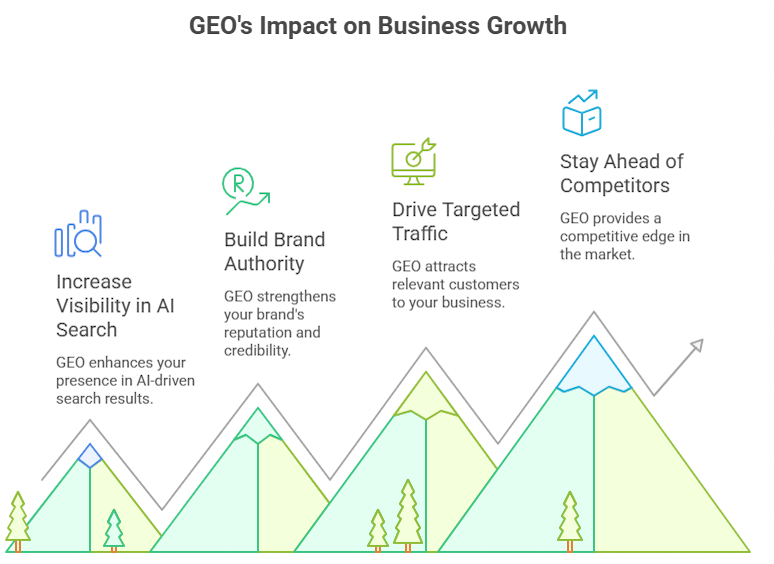
Why Your Business Needs GEO Right Now
How Nuform Social Can Help You Dominate AI Search
At Nuform Social, we help businesses transition from traditional SEO to advanced AI-driven strategies.
Our services include:
- Generative Engine Optimization (GEO)
- AI content strategy
- Search intent optimization
- SEO + GEO integration
We don’t just help you rank we help you become the answer.
Conclusion
Generative Engine Optimization (GEO) is not just a trend—it is the future of digital marketing. As AI continues to reshape how users search and consume information, businesses must evolve their strategies to stay visible and competitive.
Understanding the GEO vs SEO difference and learning how to optimize for AI search engines will give your brand a significant advantage in the coming years. While traditional SEO remains important, GEO ensures that your content is not just found—but actually used in AI-generated answers.
If you want to future-proof your digital presence, now is the time to invest in GEO and embrace the power of AI-driven search.
Frequently Asked Questions
1. What is Generative Engine Optimization (GEO)?
2. What is the main GEO vs SEO difference?
3. Why is GEO important for businesses?
4. How can I optimize for AI search engines?
5. Is SEO still relevant with GEO?
6. What type of content works best for GEO?
Ready to dominate the future of search with Generative Engine Optimization (GEO)?
Partner with Nuform Social today
Get AI-optimized, high-ranking content
Stay ahead in the AI-driven digital world
Contact Nuform Social now and turn your content into powerful AI search answers!

Manisha Sharma is an experienced content writer with over 1-2 years of expertise in crafting engaging, SEO-driven, and audience-focused content. Passionate about storytelling and travel, combines her love for exploring new places with her writing skills to create authentic and relatable narratives. From travel blogs to brand content, Manisha Sharma specializes in producing compelling copy that connects with readers and enhances brand presence across digital platforms.