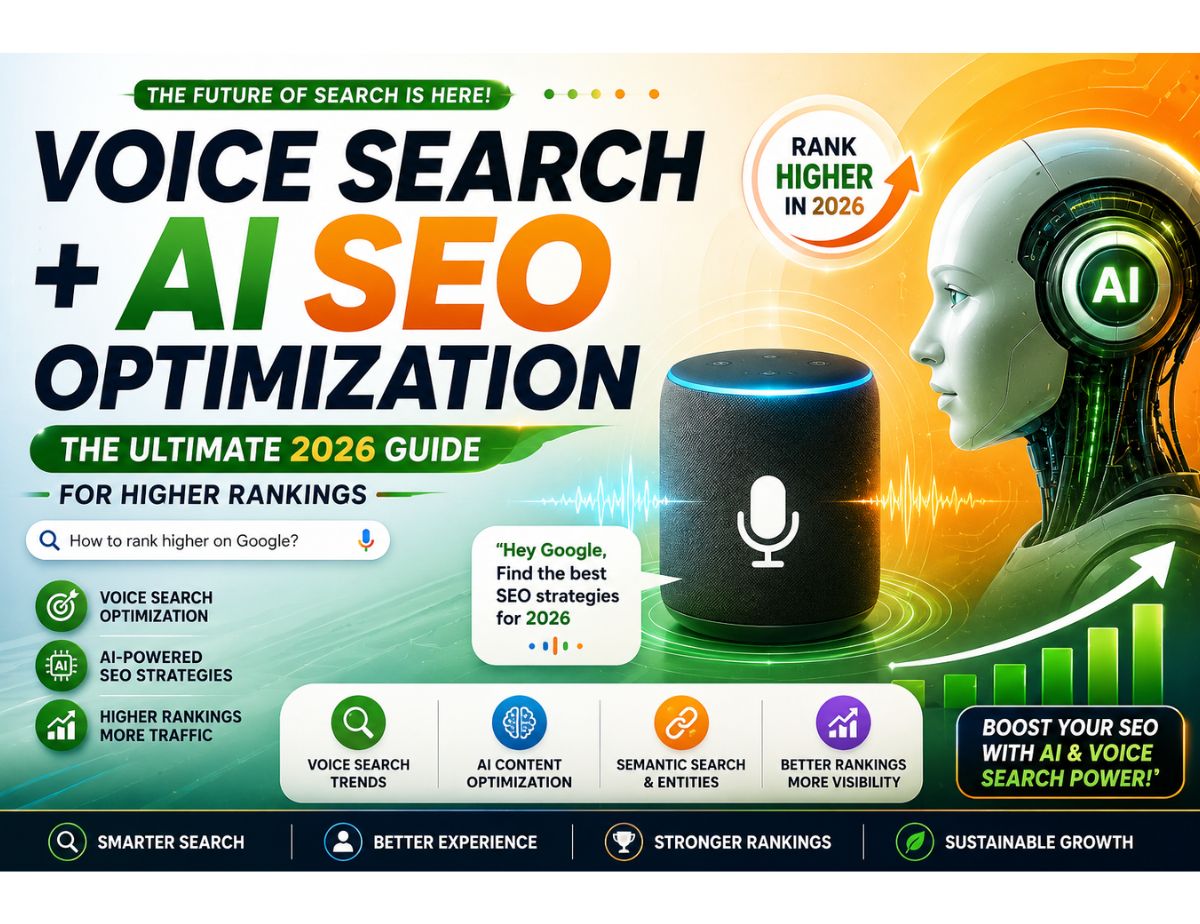
Voice Search + AI SEO Optimization: The Ultimate 2026 Guide for Higher Rankings
Voice search is no longer a futuristic trend. It has become part of everyday digital behavior. People now ask Siri, Alexa, Google Assistant, ChatGPT, Gemini, and other AI-powered systems questions naturally, just like they would speak to another person. This major shift in search behavior is changing the way websites rank online. Traditional SEO strategies focused heavily on short keywords, but modern search engines and AI assistants now prioritize conversational intent, context, and user satisfaction.
That is exactly where Voice Search + AI SEO Optimization becomes essential. Businesses that adapt to AI-driven search experiences are gaining better visibility, stronger engagement, and higher-quality traffic. At the same time, websites that continue relying only on outdated SEO tactics are slowly losing relevance in AI-powered search ecosystems.
The rise of Google AI Overviews, conversational search, and AI-generated summaries means SEO professionals must optimize content differently. Instead of writing for search engines alone, content creators now need to write for humans and AI systems simultaneously. This new era rewards websites that provide direct answers, natural language content, semantic relevance, and structured information.
In this guide, you will learn how voice search works, why AI SEO optimization matters in 2026, and how to create content that ranks effectively across both traditional search engines and AI-powered platforms.
What Is Voice Search SEO?
Voice Search SEO refers to the process of optimizing website content so it can appear in results generated by voice assistants and conversational AI systems. Instead of typing short phrases into search engines, users now ask complete questions using natural language.
Think about how people search on mobile devices today. A user may type “best pizza Delhi” into Google, but when using voice search, they are more likely to ask, “What is the best pizza restaurant near me in Delhi open right now?” That single difference changes everything about keyword research and content optimization.
Voice search is built around conversational queries. AI-powered assistants attempt to understand context, intent, location, and meaning rather than just matching exact keywords. Search engines have become smarter at processing human language, which means websites must also evolve.
Recent industry studies show that voice searches continue growing because of smartphones, smart speakers, wearables, and AI assistants integrated into apps and devices. People prefer speaking because it feels faster, easier, and more natural. This trend is especially noticeable for local searches, product comparisons, quick answers, and problem-solving queries.
How Voice Search Changed Search Behavior
Traditional SEO focused heavily on short-tail keywords. Voice search completely changed that model because spoken queries are naturally longer and more conversational.
For example:
Typed Search | Voice Search |
weather Delhi | What’s the weather like in Delhi today? |
best SEO tools | Which SEO tools are best for beginners? |
nearby coffee shop | Where is the nearest coffee shop open now? |
Voice searches are often:
- Longer
- Question-based
- Intent-driven
- Conversational
- Location-focused
This shift forces SEO professionals to rethink keyword strategies entirely.
Why Conversational Queries Matter
Search engines now prioritize content that sounds human. AI systems are trained using conversational language patterns, making natural writing more important than robotic keyword repetition.
Conversational content:
- Improves user engagement
- Matches voice search patterns
- Helps AI systems understand context
- Increases chances of featured snippets
- Supports AI-generated summaries
Modern SEO is becoming less about exact-match keywords and more about understanding the user’s actual question.
Understanding AI SEO Optimization
AI SEO optimization involves structuring content so artificial intelligence systems can easily analyze, understand, summarize, and rank it effectively. AI now plays a massive role in how search engines process information.
Search engines use machine learning models to evaluate:
- User intent
- Semantic relevance
- Content quality
- Authority
- Expertise
- Content structure
- Engagement signals
This means ranking today depends on much more than keywords alone.
Role of AI in Modern Search Engines
AI has transformed search engines from simple databases into intelligent answer engines. Instead of only matching words, search engines now interpret meaning and context.
Google’s AI systems can identify:
- Related concepts
- Topic depth
- User satisfaction
- Contextual meaning
- Entity relationships
This is why semantic SEO has become extremely important. Websites that cover topics comprehensively tend to perform better than pages targeting isolated keywords.
AI Overviews and Zero-Click Results
AI-generated summaries are changing how users interact with search results. Many people now receive answers directly on the search page without clicking multiple websites.
This creates a major challenge for traditional SEO but also opens opportunities for brands that optimize correctly.
To appear in AI-generated results, content should:
- Answer questions directly
- Use structured headings
- Include concise explanations
- Demonstrate authority
- Provide accurate information
Websites optimized for AI extraction gain visibility even when clicks decrease.
Why Voice Search + AI SEO Optimization Matters in 2026
The future of search is conversational, intelligent, and personalized. Businesses that ignore this evolution risk losing visibility in both traditional and AI-powered search results.
Growth of Smart Devices
Smart devices are now everywhere. Smartphones, smart TVs, wearables, cars, and home assistants all support voice interaction.
People increasingly use voice search for:
- Directions
- Product research
- Local businesses
- Recipes
- Tutorials
- Shopping
- Quick facts
This widespread adoption means voice optimization is no longer optional.
Rise of AI Assistants
AI assistants like ChatGPT, Gemini, Siri, Alexa, and Google Assistant are becoming digital companions rather than simple tools. Users now expect conversational answers instead of traditional search result pages.
This changes SEO dramatically because AI assistants often summarize information from trusted sources instead of showing ten blue links.
Businesses must optimize content not only for search engines but also for AI-generated responses.
Key Ranking Factors for Voice Search SEO
Voice search SEO depends heavily on user experience, speed, structure, and conversational relevance.
Natural Language Optimization
The biggest shift in voice SEO is natural language optimization. Content should sound like a real conversation rather than a robotic keyword list.
Instead of writing:
“best digital marketing company SEO services affordable”
Write:
“What are the best affordable SEO services for small businesses?”
Natural phrasing helps search engines match content with spoken queries.
Featured Snippets
Featured snippets are extremely important for voice search because assistants often read snippet answers aloud.
To improve snippet visibility:
- Use question-based headings
- Provide direct answers
- Keep explanations concise
- Structure information clearly
Well-organized content improves extraction opportunities.
Mobile Optimization
Most voice searches happen on mobile devices. A slow or poorly designed mobile site damages rankings significantly.
Important mobile SEO factors include:
- Responsive design
- Fast loading speed
- Easy navigation
- Readable text
- Minimal intrusive popups
Page Speed
Speed matters enormously for both AI SEO optimization and voice search rankings.
Users expect instant answers. Search engines prioritize websites that load quickly because fast experiences improve user satisfaction.
Best AI SEO Optimization Strategies
AI SEO optimization requires a broader strategy focused on topical authority and semantic understanding.
Search Intent Optimization
Search intent is the foundation of modern SEO.
AI systems analyze whether users want:
- Information
- Products
- Comparisons
- Reviews
- Solutions
Content should align directly with the user’s purpose.
Semantic SEO
Semantic SEO focuses on related concepts instead of repetitive keywords.
For example, a page about voice search optimization may naturally include:
- Conversational queries
- AI assistants
- Search intent
- Smart speakers
- Mobile SEO
- Natural language processing
This improves contextual relevance.
Entity-Based SEO
Entities are recognizable concepts understood by search engines.
Examples include:
- Siri
- ChatGPT
- SEO
- Voice search
Search engines use entity relationships to understand topics more deeply.
How to Optimize Content for Voice Search
Voice search optimization requires both strategic keyword targeting and human-friendly writing.
Using Question-Based Keywords
Voice searches are often phrased as questions.
Examples:
- What is AI SEO optimization?
- How does voice search affect SEO?
- Which AI tools help SEO rankings?
Question-based content aligns naturally with spoken searches.

Manisha Sharma is an experienced content writer with over 1-2 years of expertise in crafting engaging, SEO-driven, and audience-focused content. Passionate about storytelling and travel, combines her love for exploring new places with her writing skills to create authentic and relatable narratives. From travel blogs to brand content, Manisha Sharma specializes in producing compelling copy that connects with readers and enhances brand presence across digital platforms.