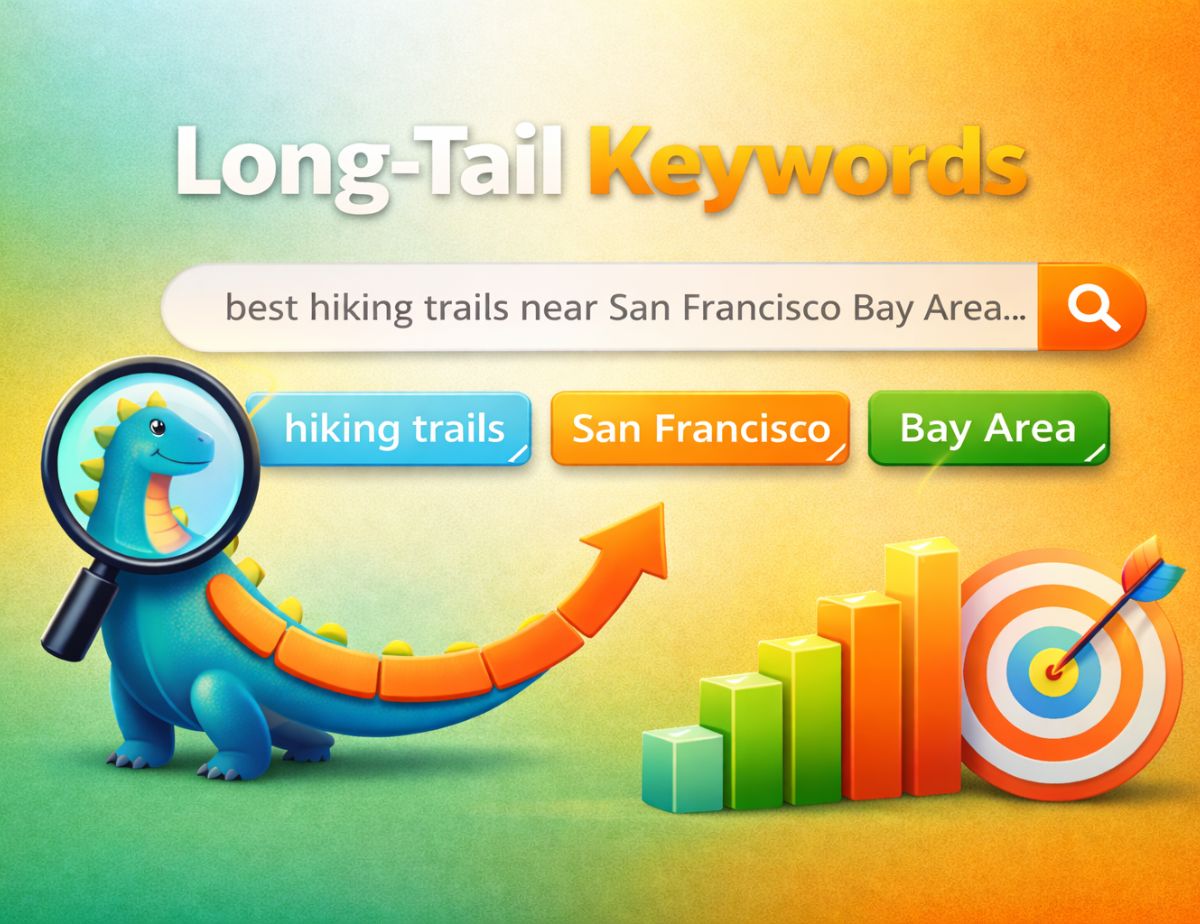
Long-Tail Keywords: How to Find & Use Them for SEO Success
If you have ever attempted ranking a website on Google, you already know how competitive it can be when it comes to using keywords. Many companies compete for the same keywords, like “digital marketing” or “SEO services.” What if there is a more effective way of attracting visitors who are actually interested in purchasing a service? This is exactly where long tail keywords come in. Unlike general keywords, which can be quite broad, long tail keywords focus on specific keywords. For example, a person might search “SEO.” This does not guarantee anything, as the person might just be browsing. On the other hand, a person might search “best SEO agency for small business in Noida.” This means he already knows what he wants. The statistics on long tail keywords prove their effectiveness. “70-92% of search traffic and 2.5x more conversions than short tail keywords.” In simple words, long tail keywords bring fewer visitors, but the results are better. The following information will help you understand:
- What long tail keywords are
- Why you should use them
- How you can find them
- How you can use them
By the end of it, you will know how you can build a powerful keyword strategy.
What Are Long-Tail Keywords?
Simple Definition of Long-Tail Keywords
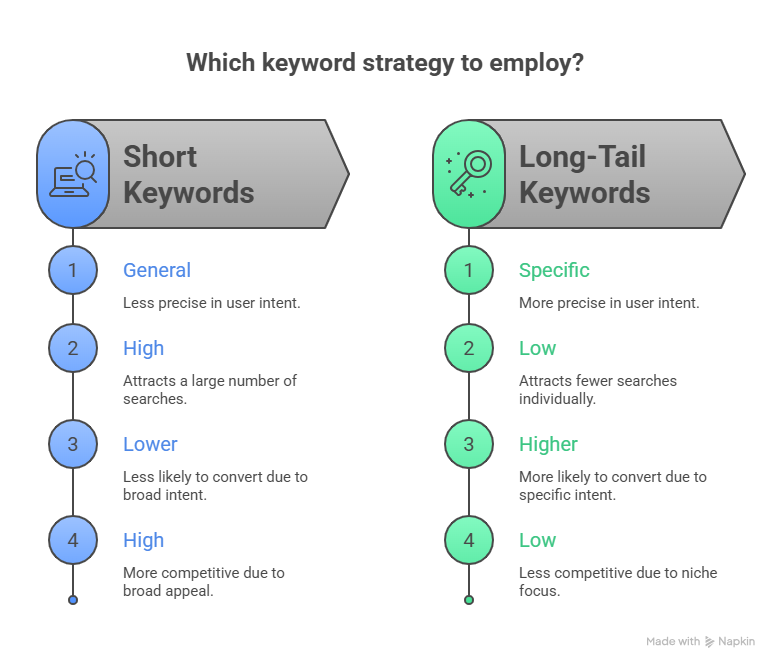
Long-tail keywords are keyword phrases with three words or more that a search engine user might enter when searching for something.
Unlike short keywords like:
- “Laptop”
- “SEO”
- “Running Shoes”
Long-tail keywords look like:
- “Best Gaming Laptop Under 80000”
- “SEO Services for Small Businesses”
- “Comfortable Running Shoes for Flat Feet”
While short keywords are more general, long-tail keywords are more specific, which means they are more useful for marketers.
To understand why, let’s use an analogy.
Imagine you’re fishing.
Throwing a net into the ocean means catching a lot of fish, but you might not get what you want.
Throwing a spear into the water means you get what you want.
Examples of Long-Tail Keywords in Real Searches
Now that we have an idea of what long-tail keywords are, let’s take a look at some examples to understand this concept even better.
Short Keyword Long-Tail Keyword
SEO best seo agency for startups
Shoes running shoes for marathon beginners
Laptop best laptop for graphic design under 1000
Marketing digital marketing strategy for local businesses
As we can see, the long-tail keyword is more specific to the type of information that the user wants to obtain.
And this is exactly why Google loves long-tail keywords. They are capable of providing users with more accurate results.
Why Long-Tail Keywords Are Important for SEO
Higher Conversion Rates
One of the most significant advantages of using long-tail keywords in your content is that it has a very high conversion rate.
Broad keywords are used to attract people who are merely looking to know more.
However, when people are searching for long-tail keywords, they are in a completely different mindset.
For example:
“best digital marketing agency for real estate”
The user who searches for this keyword is already in a mindset to make a choice.
Studies have shown that long-tail keywords have an average conversion rate of 36%.
And that’s much higher compared to any other keyword.
This means that there will be:
- More leads
- More customers
- More profits
Lower Competition and Easier Ranking
The competition for short keywords like “SEO services” can be incredibly tough. These keywords are dominated by big brands and powerful websites.
Long-tail keywords are the answer to this issue.
Due to their specificity, fewer websites are optimized for these keywords. This results in lower competition and easier ranking.
Pages optimized for long-tail keywords have been known to jump up an average of 11 positions faster compared to pages optimized for short keywords.
Therefore, long-tail keywords are the best solution for:
New websites
Small businesses
Bloggers
Startups
Long-Tail Keywords vs Short-Tail Keywords
Key Differences Between Them
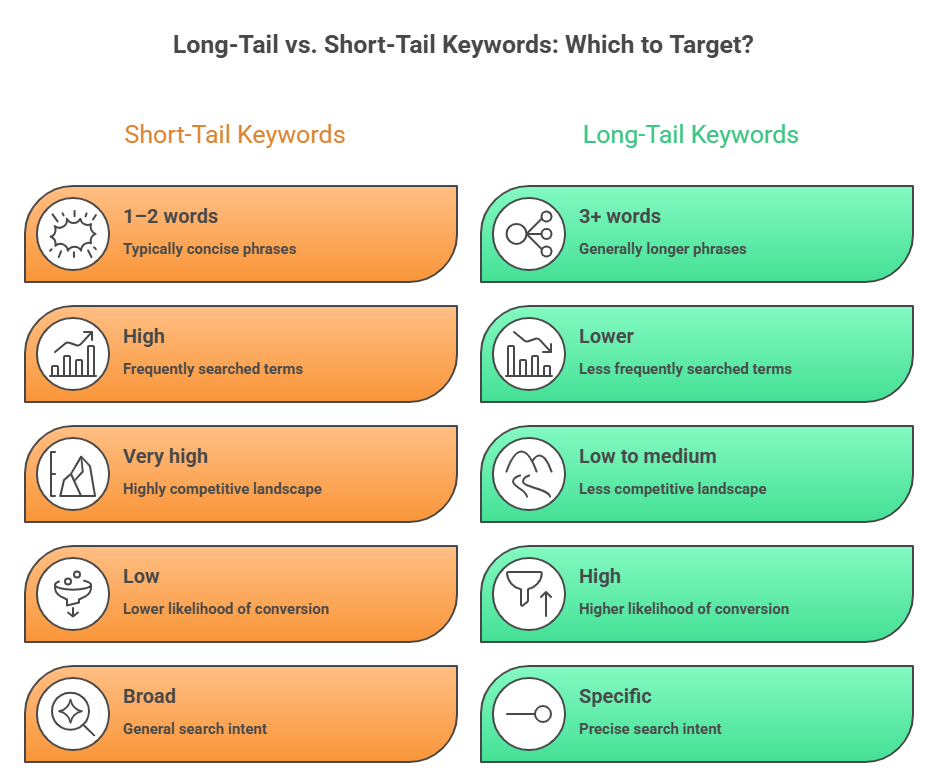
The first step towards developing an efficient SEO strategy involves understanding the difference between these two keywords.
Short-tail keywords are broad terms that are frequently used for searching.
Long-tail keywords are specific phrases that are used for searching.
Now, let’s compare these keywords.
Comparison Table
Feature Short-Tail Keywords Long-Tail Keywords
Length 1–2 words 3+ words
Search Volume High Lower
Competition Very high Low to medium
Conversion Rate Low High
User Intent Broad Specific
While short keywords generate more traffic, long-tail keywords generate higher-quality traffic that is ready to convert.
Benefits of Using Long-Tail Keywords
Targeted Traffic
You own a bakery.
You start ranking for the keyword “cake.”
You get tens of thousands of visitors.
The problem is that they are just looking for cake.
Now compare that to ranking for:
“custom birthday cake delivery in Noida”
This visitor knows:
- What they want to know
- Where they want to know it
- When they want to know it
That is the power of targeted traffic.
Better Content Relevance
Today, search engines focus on relevance and intent.
Long-tail keywords enable you to create content that answers users’ questions.
For example:
Instead of writing a general article on the topic “SEO,” you can create specific content on the following topics:
- “SEO tips for small businesses in India”
- “How to rank local business on Google?”
- “SEO strategies for ecommerce stores”
This strategy is beneficial in terms of:
- Content quality
- Search engine rankings
- User engagement
How to Find Long-Tail Keywords
You do not have to spend a fortune on expensive software to find long-tail keywords. The best sources are free.
Using Google Autocomplete
Google is one of the most powerful sources to find long-tail keywords.
When you type something in the Google search bar, it automatically offers related keywords.
For example:
If you type “digital marketing” in the Google search bar, you may get the following suggestions:
- digital marketing strategy for beginners
- digital marketing agency for startups
- digital marketing services in Noida
Using Keyword Research Tools
There are several tools that can help us find long-tail keywords.
The most popular ones are:
- Google Keyword Planner
- Uber suggest
- AnswerThePublic
- Ahrefs
- Google Trends
These tools provide us with information such as:
- Search volume
- Competition level
- Keyword difficulty
- Related keyword ideas
By analyzing this data, we can find keywords that have less competition and greater potential.
Using “People Also Ask” and Forums
Another technique to find long-tail keywords is by analyzing questions people are asking.
The places to find this information are:
- Google’s “People Also Ask” section
- Quora
- Forums related to our industry
These places will give us an idea of the problems people are facing.
The questions people are asking can be turned into keywords.
How to Use Long-Tail Keywords in Content
Finding the keywords is only half the battle. The real power comes in using those keywords properly.
On-Page SEO Placement
For better SEO performance, it is advisable to use long-tail keywords in the following on-page SEO placements:
- Page title
- Meta description
- H1 tag
- Subheadings
- First paragraph
- Image alt
- URL
This will help the search engine understand the content of the page properly.
Blog Content Optimization
Blog content is one of the most powerful ways to use long-tail keywords.
Instead of writing general content, use it as a tool to solve a problem.
For example,
Instead of writing:
“Digital Marketing Tips”
Write:
“Digital Marketing Tips for Small Businesses in 2026”
This will help make the content more search-friendly.
Long Tail Keyword Strategy for Businesses
Local SEO Optimization
Local businesses will greatly benefit from using long tail keywords.
Some examples are as follows:
- best dentist in Noida sector 18
- digital marketing agency in Noida for startups
- affordable web design services near me
Voice Search Optimization
Voice search is growing at a rapid pace, thanks to smartphones and other smart devices.
Humans tend to talk differently compared to how they type.
Instead of typing:
weather Delhi
They would say:
What is the weather like in Delhi today?
This is a natural occurrence of using long tail keywords.
By using this strategy, businesses will be able to optimize their search engine results on voice search as well.
Common Mistakes When Using Long Tail Keywords
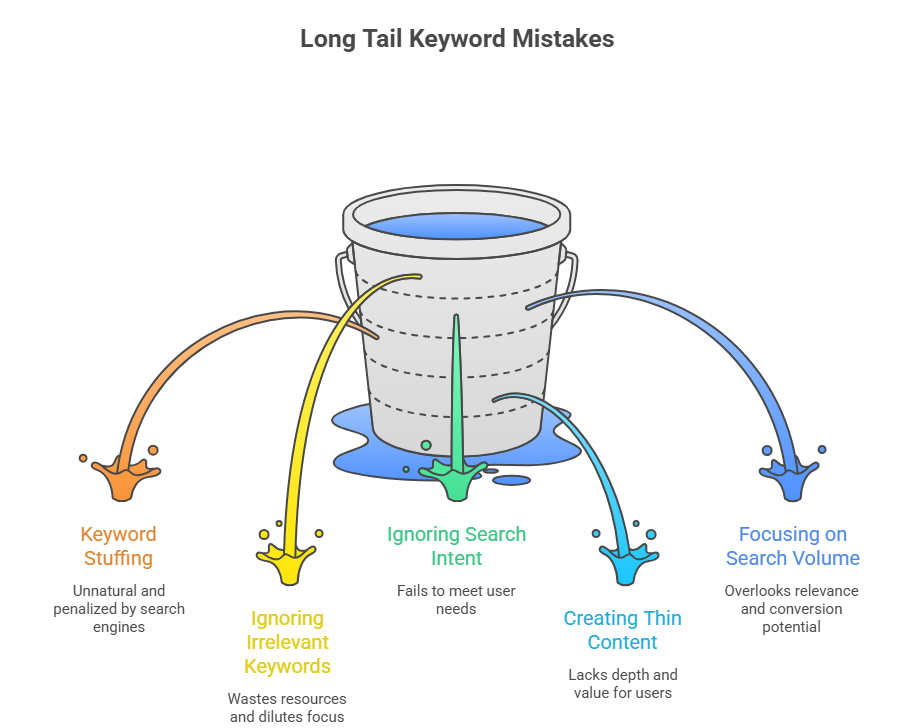
There are some common mistakes that most marketers make when using long tail keywords.
Some of these mistakes are as follows:
- Keyword stuffing
- Ignoring irrelevant keywords
- Ignoring search intent
- Creating thin content
- Focusing on search volume
The best approach to using long tail keywords is to create valuable content that incorporates relevant keywords.
Why Businesses Trust Nuform Social for SEO
Implementing an SEO strategy is not an easy task; it requires expertise, research, and optimization.
This is where Nuform Social comes in.
Nuform Social helps businesses:
- Find successful long-tail keywords
- Create SEO-friendly content
- Improve their rankings on Google
- Increase organic traffic
- Generate quality leads
Using advanced technology, Nuform Social ensures your business reaches the right people at the right time.
Ready to Grow Your Website Traffic?
If you want to make sure your business reaches the top spot on Google and attract potential customers, Nuform Social can help you create a powerful SEO strategy with long-tail keywords.
Contact Nuform Social today to transform your search engine traffic into business growth.
Don’t let your competition get ahead with their optimized keywords; let Nuform Social help you today.
Long-tail keywords are one of the most powerful, yet most underrated, SEO strategies.
Although the volume may not be extremely high individually, the combined volume is massive. More importantly, though, is the fact that long-tail keywords attract people who already know what they want.
Targeting long-tail keywords allows you to:
- Rank faster on Google
- Drive targeted traffic to your site
- Increase your conversion rates
- Create a sustainable SEO strategy
Regardless of your business type, whether you’re a blogger, startup, or already an established business, learning to use long-tail keywords effectively is sure to change your online game.
With the expertise and guidance provided by Nuform Social, this strategy is easier to execute and far more successful.
What is a long-tail keyword in SEO?
Why are long-tail keywords important?
How many words are in a long-tail keyword?
Do long-tail keywords have low search volume?
Are long-tail keywords better for new websites?
6. How do I find long-tail keywords for free?
7. Can long-tail keywords improve conversions?
8. Should I use multiple long-tail keywords in one article?
How to Change my Photo from Admin Dashboard?
9. Are long-tail keywords useful for local SEO?
10. How can Nuform Social help with long-tail keyword SEO?

Manisha Sharma is an experienced content writer with over 1-2 years of expertise in crafting engaging, SEO-driven, and audience-focused content. Passionate about storytelling and travel, combines her love for exploring new places with her writing skills to create authentic and relatable narratives. From travel blogs to brand content, Manisha Sharma specializes in producing compelling copy that connects with readers and enhances brand presence across digital platforms.