
AI Marketing Stats: 10 Insights Every Marketer Needs for 2026
The digital marketing world has never changed this fast. AI Marketing Stats provides a preview of the speed at which the world of digital marketing is changing. Artificial Intelligence is rapidly changing the digital marketing world. In the last few years, businesses have been moving from traditional marketing to artificial intelligence based marketing. Artificial intelligence based marketing has allowed businesses to analyze massive amounts of consumer data, run marketing campaigns and provide consumers with a high level of personalization. Not predictions. Not forecasts. Hard facts. Based on hard data. Based on AI Marketing Stats. Understanding AI Marketing Stats enables marketers, business owners and digital marketing strategists to grasp the speed at which the digital marketing world is changing. Artificial intelligence based marketing techniques like AI based content generation, AI based predictive analytics, AI based advertising, etc., are changing the digital marketing industry. Businesses are experiencing increased consumer responses, higher conversion rates and increased productivity due to the implementation of artificial intelligence based marketing techniques. As we are moving towards the year 2026, statistics are proving the significance of artificial intelligence based marketing techniques.
Here are 10 statistics regarding artificial intelligence based marketing approaches.
88% of Marketers Use AI in Their Daily Workflow

One of the most interesting and relevant AI marketing stats is that about 88% of marketers today use AI tools in their daily workflow. This includes content writing, keyword research and customer segmentation.
This shows that marketers today are making use of AI tools to automate their workflow and become more efficient in their jobs.
This is so because AI tools can process a large amount of data and give marketers an idea about the behavior and needs of customers and suggest the best strategy for marketers.
For instance, AI tools can help marketers generate ideas for a blog post, schedule social media content and automate ad spend based on the performance of the ad campaign. This indicates that AI is no longer a luxury for marketers today; rather, it has become a necessity for marketers today.
76% of Marketing Teams Use AI for Core Operations

It is evident that AI has become a fundamental part of the operations of many marketing teams. According to research, it is clear that 76% of marketing teams use AI for their core operations.
Core operations entail activities such as targeting the audience and analyzing the customers. The use of AI enables marketers to understand their customers better and thus design a campaign that resonates with the customers.
For instance, AI enables marketers to understand the behavior of customers from different websites and social media platforms. Through the analysis of the behavior of customers, marketers can be able to understand the products that customers are likely to purchase and the timing.
This enables businesses to formulate effective strategies that help improve the effectiveness of the campaign.
94% of Marketers Are Using AI in Some Form
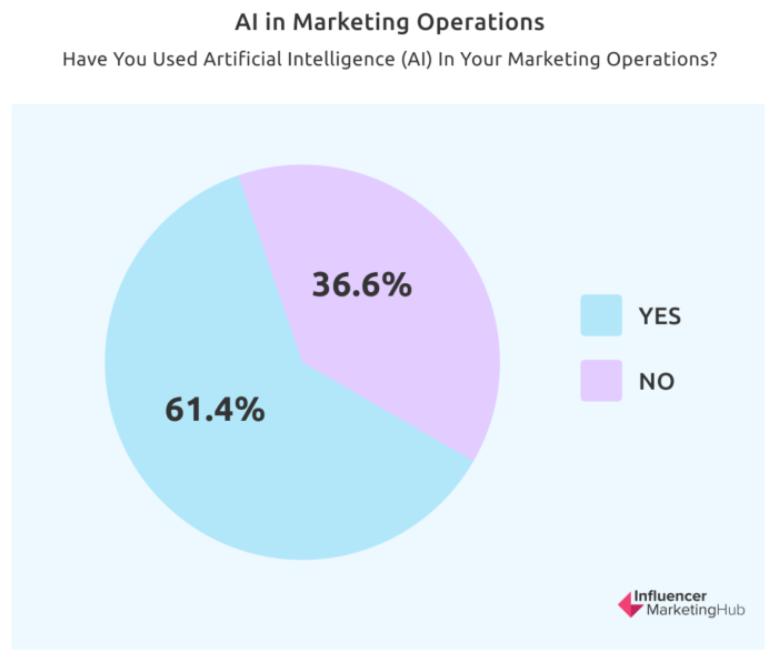
Another surprising fact is that 94% of marketers use AI in some form. This indicates that AI technology has been widely accepted in the marketing industry.
Some of the ways companies use AI technology include:
Customer support through chatbots
Email marketing
Social media analysis
Advertising
Small businesses are also using AI technology since most of the available technology is easily affordable. This technology helps small businesses compete even with big corporations.
AI Improves Marketing Productivity by 40–45%
One of the biggest benefits of AI is that it increases productivity. According to studies, AI tools can improve the productivity of marketers by up to 44%.
For instance, marketers spend a lot of time analyzing data and creating reports. They also spend a lot of time creating content for social media and ads. AI tools help marketers save a lot of time by automating these tasks.
For example, an AI tool for analyzing data can create a detailed report in just a matter of seconds. Similarly, an AI tool for content creation can create a content draft in just a matter of minutes.
AI Marketing Ensures a High Return on Investment
While the efficiency of AI marketing is undeniable, its ability to ensure a high return on investment is perhaps even more significant. A study indicates that organizations receive an average of $3.70 for every $1 invested in AI marketing tools.
This high return on investment is one of the main reasons organizations are willing to spend so much on artificial intelligence marketing. Marketing with AI helps organizations achieve more precision in targeted marketing as well as more success in marketing campaigns.
For instance, an AI tool for marketing optimizes the options for a campaign by using an algorithm. This optimizes the spending of the company on the campaign.
AI Personalization Can Increase Revenue by 25%
One of the best marketing strategies that marketers can use today is the strategy of personalization. This is an area where AI plays a major role in helping marketers personalize the messages that they send to customers.
It has been found that the use of AI for personalization can help marketers achieve an increase in revenues by between 15 and 25 percent.
This is possible through the analysis of data and making recommendations to customers.
For instance, e commerce sites make recommendations to customers through AI algorithms. These recommendations are made based on the browsing history of the customers. Similarly, music streaming services make recommendations to their customers through AI.
The AI Marketing Industry Is Growing Rapidly
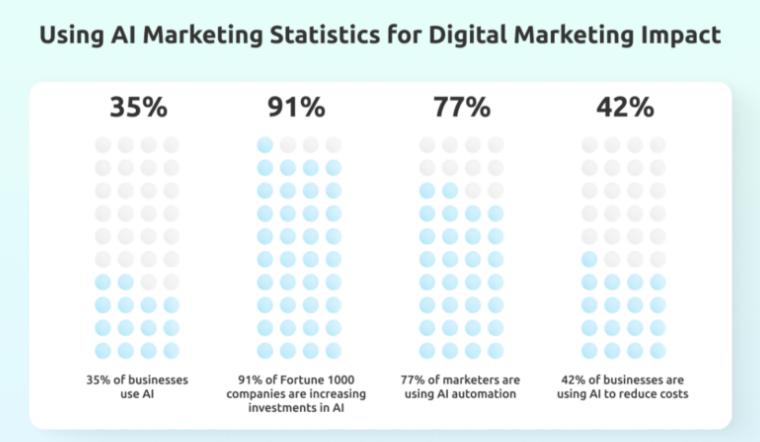
The AI marketing industry is growing explosively all over the world. According to market analysts, the industry made a revenue of about $47 billion in 2025. This industry is likely to increase in the coming years, reaching more than $100 billion in a few years to come.
This is a consequence of the need to use AI in the marketing industry. Many firms in different industries are adopting the use of artificial intelligence to aid them in competing in the industry.
New AI technologies are emerging in the market, such as predictive analytics software and AI content generators.
The fact that the industry is growing proves that AI is here to stay in the marketing industry.
AI Advertising Spending Is Increasing by 60%+
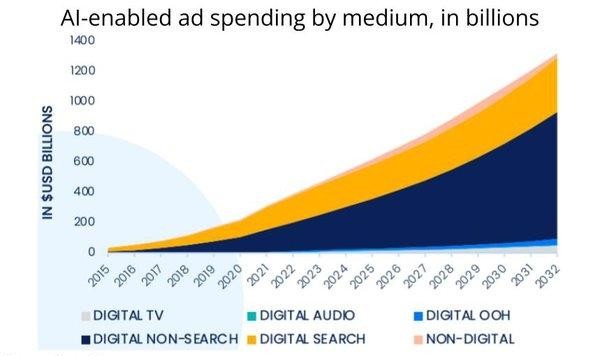
Another field in which AI is leaving a huge impact is advertising. It has been predicted that AI advertising spending would rise by more than 60% by 2026.
Platforms for AI advertising make use of machine learning algorithms to automatically optimize advertising campaigns. These tools make use of real time data to improve the advertisement campaign.
The use of AI in advertisement can help marketers achieve the best results with minimal efforts.
It also enables businesses to reach the right audience at the right time while also saving wasted advertising expenses.
With the rise in competition in digital advertising, AI platforms are becoming a necessity for achieving high ROI.
67% of Businesses Believe AI Will Improve Personalization

The need to have a personal experience for the customers has never been higher, but research indicates that 67% of businesses believe that AI will improve the personalization of the marketing experience.
The technology offered by AI has the ability to process a huge amount of data pertaining to the customers, such as their behavior and shopping patterns.
With this ability to comprehend the data, a highly personalized marketing experience is offered to the customers, which in turn helps to improve their level of satisfaction.
A highly personalized experience is offered to the customers, which in turn helps to build a strong relationship with them.
AI Could Influence 90% of Marketing Decisions by 2030
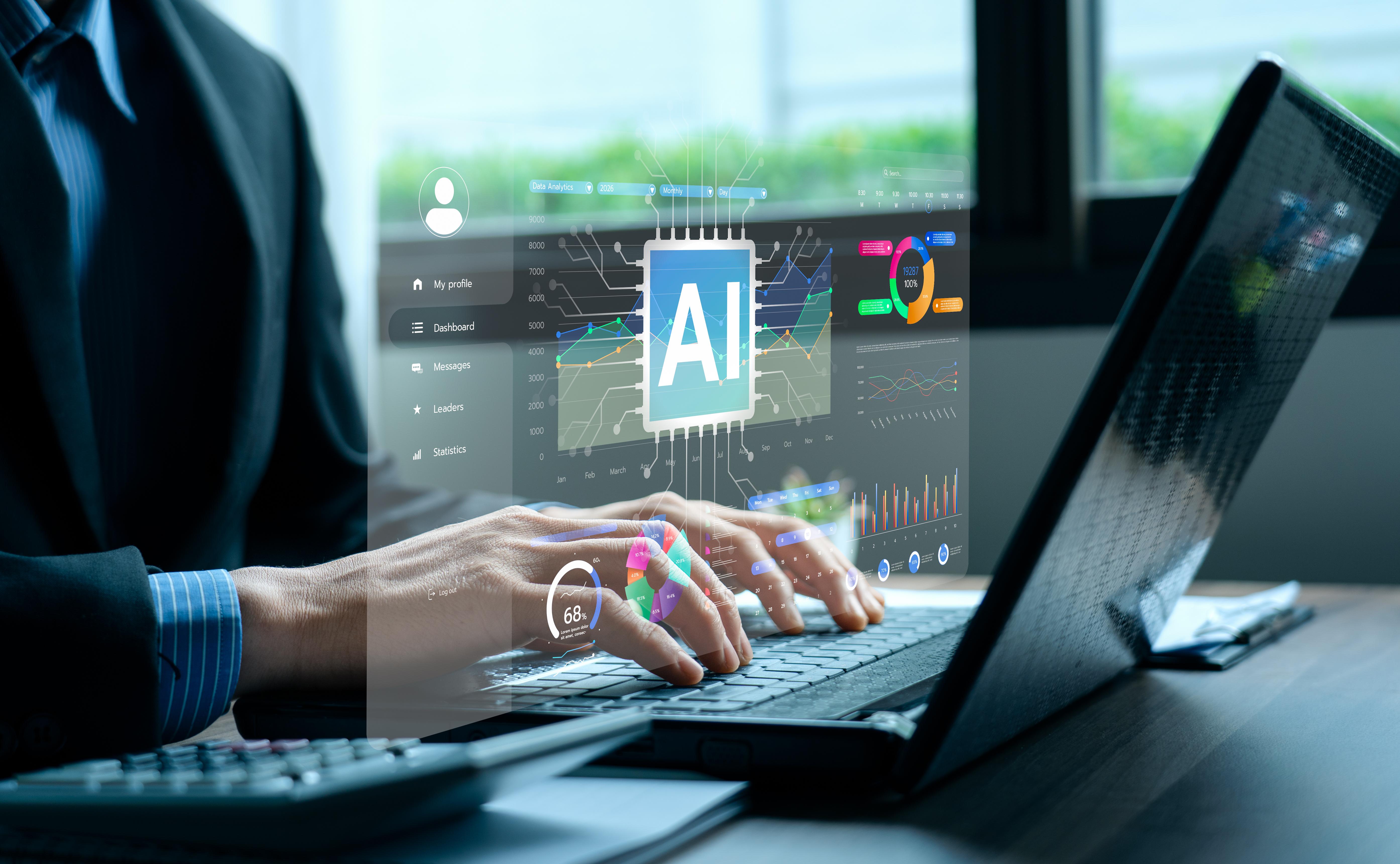
As we look into the future, it has been projected that by the year 2030, there is a potential for AI to influence as much as 90% of marketing decisions.
Artificial intelligence is expected to be the key determinant in marketing decisions in relation to marketing strategies for marketing campaigns as well as optimizing the customer experience.
There would no longer be a need for marketers to rely on intuition and creativity; rather, marketers would be able to incorporate creativity and AI.
There is a potential for businesses to benefit if they are able to leverage AI in marketing strategies.
The AI marketing stats discussed above clearly indicate that a tremendous change is occurring in the marketing industry due to the advent of artificial intelligence. As we move towards the year 2026, the importance of AI in the marketing industry will continue to increase. Organizations will be able to increase their efficiency in terms of business through the use of AI technologies. Marketers and businessmen, let me tell you one thing for sure: AI is not the future of marketing; AI is the future of marketing. AI is the future of marketing. However, if your aim is to be ahead of your competitors and to enhance your business results, then I would like to recommend to you that you start considering how to implement AI marketing strategies in your business today. The earlier you start, the earlier you can enhance your business results.
FAQs
1. What are AI marketing stats?
2. Why is AI important in marketing?
3. How many marketers currently use AI?
4. What are common AI marketing tools?
5. How does AI improve marketing productivity?
6. Is AI marketing expensive?
7. What industries benefit the most from AI marketing?
8. Will AI replace human marketers?
9. How does AI improve customer experience?
10. What is the future of AI marketing?

Manisha Sharma is an experienced content writer with over 1-2 years of expertise in crafting engaging, SEO-driven, and audience-focused content. Passionate about storytelling and travel, combines her love for exploring new places with her writing skills to create authentic and relatable narratives. From travel blogs to brand content, Manisha Sharma specializes in producing compelling copy that connects with readers and enhances brand presence across digital platforms.