

Illustration of Google SEO tools showing search optimization, analytics, and Googlebot crawl limits with charts, target icon, and magnifying glass

Google Shares More Information on Googlebot Crawl Limits: What It Means for SEO in 2026

As the field of search engine optimization is constantly changing, so is the approach taken by search engines to crawl and index content. Recently, Google has shared more information on the limits of the Googlebot crawl. This gives website owners a better idea of the approach taken by the search engine to crawl the website. This is a crucial factor for the improvement of website visibility. In this comprehensive guide, we will discuss what the Googlebot crawl limits are, their importance, their impact on SEO performance, and the steps taken for the improvement of the website. 

Understanding Googlebot and How Crawling Works

Googlebot is a robot or a web crawler used by Google to look for new web pages and update the information it has already gathered. The robot crawls the web by using links and analyzing the structure of the website and the information it holds. 

After a webpage is crawled by the Googlebot robot, it performs a number of functions, including: 

  • Downloading the information on the webpage
  • Analyzing the structure of the webpage
  • Following the links on the webpage
  • Forwardingthe webpage to the indexing system of Google

However, the Googlebot robot does not crawl the web endlessly. It has limitations or restrictions to ensure it works efficiently and does not slow servers. 

What Are Googlebot Crawl Limits?

Googlebot crawl limits

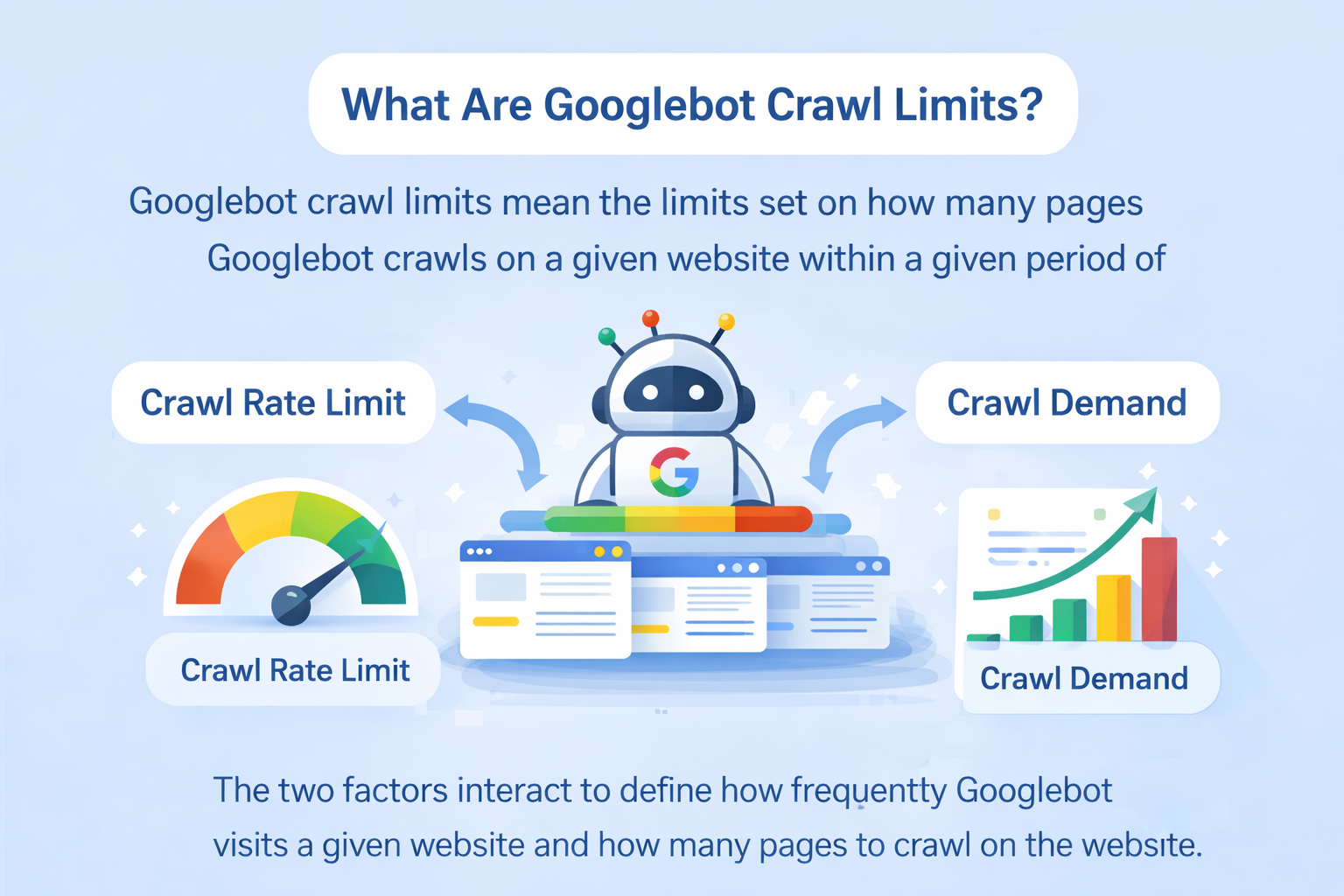
Googlebot crawl limits mean the limits set on how many pages Googlebot crawls on a given website within a given period of time. 

According to Google, Googlebot crawl limits depend on two main factors: 

  1. Crawl Rate Limit
  2. Crawl Demand

The two factors interact to define how frequently Googlebot visits a given website and how many pages to crawl on the website. 

1. Crawl Rate Limit

The crawl rate limit sets how frequently Googlebot requests your server without overloading it. 

Google sets this limit by itself to ensure that a given website remains stable and accessible. As soon as a website server starts slowing down and/or producing errors, Googlebot reduces its rate of crawling on the website. 

Factors Affecting Crawl Rate 

Various factors affect the crawl rate limit: 

Server performance 

Site response time 

HTTP errors (5xx errors) 

Server capacity 

Hosting infrastructure 

Assume that your server works very fast and responds to requests without errors. This would mean Googlebot would increase its rate of crawling on your website. However, if your server works very slowly and/or produces errors frequently, Googlebot would reduce its rate of crawling on your website. 

2. Crawl Demand

It refers to the demand that Google has for crawling that particular website. It depends on the popularity, updations, and importance of the information. 

Factors that increase the demand for crawling a website:  

  • Frequently updated information on the website 
  • High authority of the website 
  • Trending information on the website 
  • Good internal linking on the website 
  • Demand for the information on the search result page 

For instance, the crawl demand for news websites is extremely high because the information on the website is updated frequently, and users want to read the information that is updated. 

Significance of Googlebot Crawl Limits for SEO

It is imperative that you understand the significance of crawl limits, as this will have a direct impact on the timely appearance of your website in the search engine results. 

If you have a website with thousands of web pages, and the Googlebot has a certain limit to crawl on a daily basis, your web pages may not be crawled as early as you want. 

This will impact: 

  • New contentvisibility
  • Improvement in rankings
  • Updates on the website
  • Technical SEO performance


If your website is optimized for crawling, you can assist the Googlebot in locating the most valuable web pages on your website. 

Common Crawl Budget Issues

While some small websites may not reach the crawl limits, large websites are likely to face crawl budget issues. 

Some of the common crawl budget issues that cause waste of crawl resources are as follows: 

1. Duplicate Content

Duplicate content on the site may cause confusion to the search engines, resulting in the waste of crawl resources. 

Some of the issues that may cause the waste of crawl resources are as follows: 

  • Multiple URLs with the same content 
  • Parameter-based URLs 
  • Session IDs 

Canonical tags may be implemented to solve these problems. 

2. Broken Links

WhatsApp Image 2025 11 13 at 2.47.17 PM 1 1 1

Manisha Sharma is an experienced content writer with over 1-2 years of expertise in crafting engaging, SEO-driven, and audience-focused content. Passionate about storytelling and travel, combines her love for exploring new places with her writing skills to create authentic and relatable narratives. From travel blogs to brand content, Manisha Sharma specializes in producing compelling copy that connects with readers and enhances brand presence across digital platforms.

Leave a Comment

Your email address will not be published. Required fields are marked *

Scroll to Top